

Discover places of wonder through architecture and history. Featuring pen illustrations of remarkable places. Explore: The Architecture Atlas Archive | The Places of Wonder Mail Club
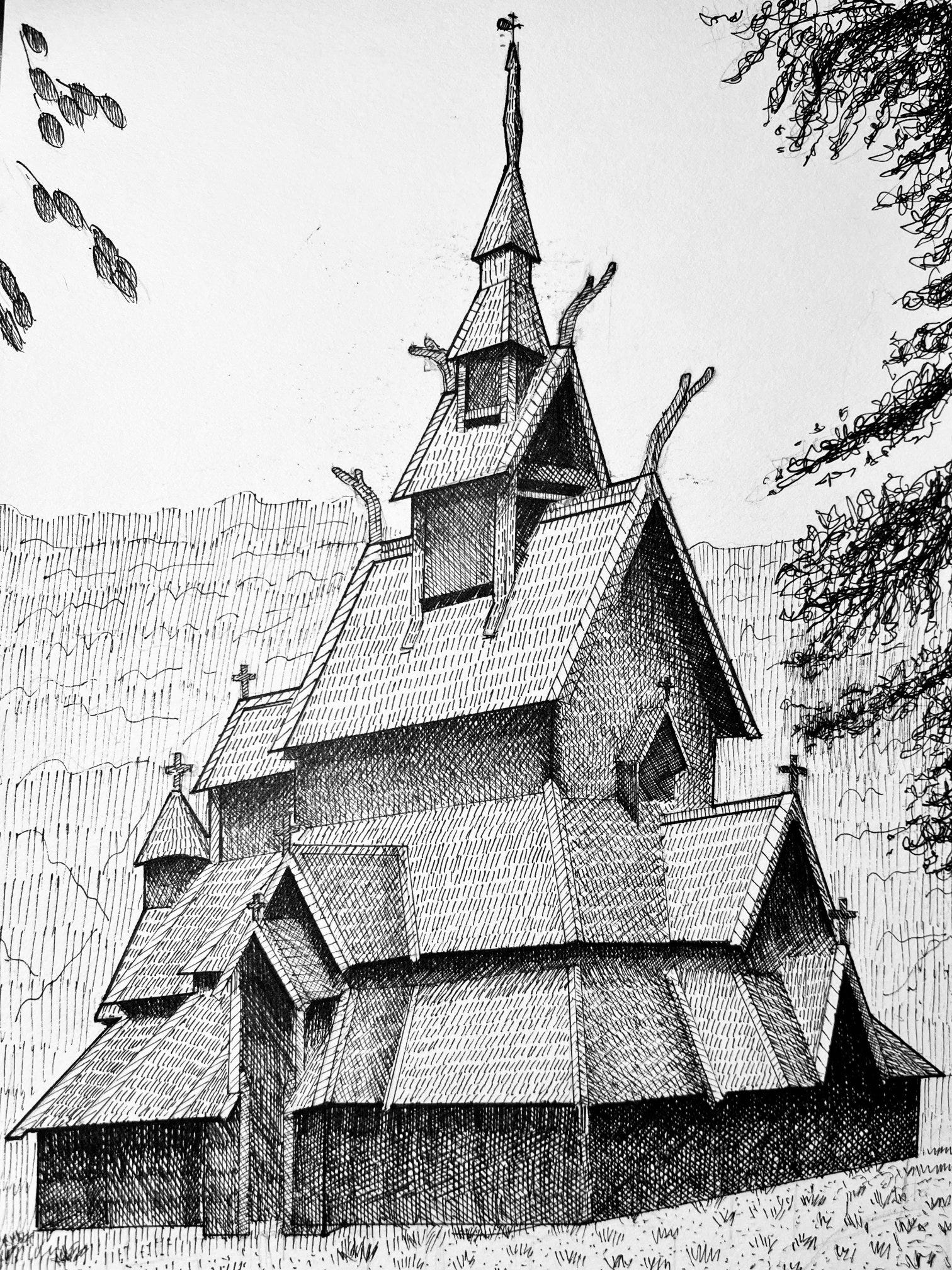
Places of Wonder No. 01
Borgund Stave Church
Norway | c. 1180
Last week, the very first edition made its way to Places of Wonder Mail Club members. Today, I want to share the remarkable story behind the place and the illustration with all of you.
Overview
Located in the village of Borgund, in Vestland County, Norway this more than 800-year-old wooden church is one of only 28 surviving stave churches in the country. With soaring shingled roofs, carved dragons, and detailed portals, Borgund Stave Church combines Viking era motifs and medieval Christianity into a singular statement in timber.
Borgund Stave Church
Dedicated to the Apostle Andrew, Borgund Stave Church was built around 1180 AD.
The wooden stave church sits atop a raised stone foundation and was built without metal nails and instead used techniques such as dovetailing or wedging to allow the structure to flex with the weather.
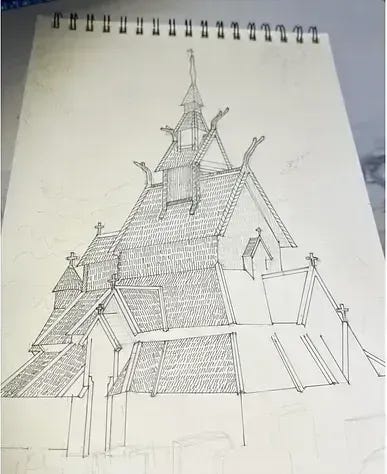
What is a stave church?
It’s a medieval wooden church built with a post and frame structure. These load-bearing timber posts are called staves. The name stave comes from ‘stafr’ meaning post in Old Norse.
The style of the stave church was influenced by earlier Nordic timber-building traditions and contemporary Romanesque and Gothic architecture and features weathered, shingled roofs reaching towards the heavens.
Projecting from the upper levels of the roofs are carved dragon heads with their protruding tongues and are said to protect against evil spirits.
Widely considered the best preserved stave church in Norway, it is one of only 28 surviving stave churches of the originally 1000 - 2000 built in the medieval era.
The dark timber and shape makes the church seem as if it belongs in legend.
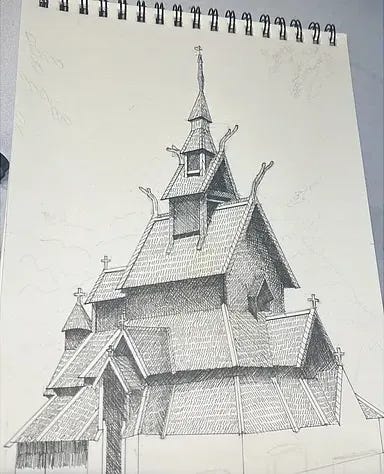
The Danish poet Holger Drachmann describes Borgund Church in 1886…
“… a whim of childlike brilliance, a house for beetles, whittled from a naive giant’s playful knife, with modest crosses and large nosed dragons, wrinkled and gnarled, twig upon twig.”
The interior of Borgund Stave Church features decoration on the west portal of battling dragons and rhythmic vine motifs and is one example of using the fabled animals of the Vikings and Christian portrayals of the battle of good and evil.
Conclusion
The stave churches are in a class of their own, weaving together Norse timber craftsmanship and traditions with Christian building styles and teachings and in Borgund we see the best surviving example of the Norwegian stave churches.
From the Studio
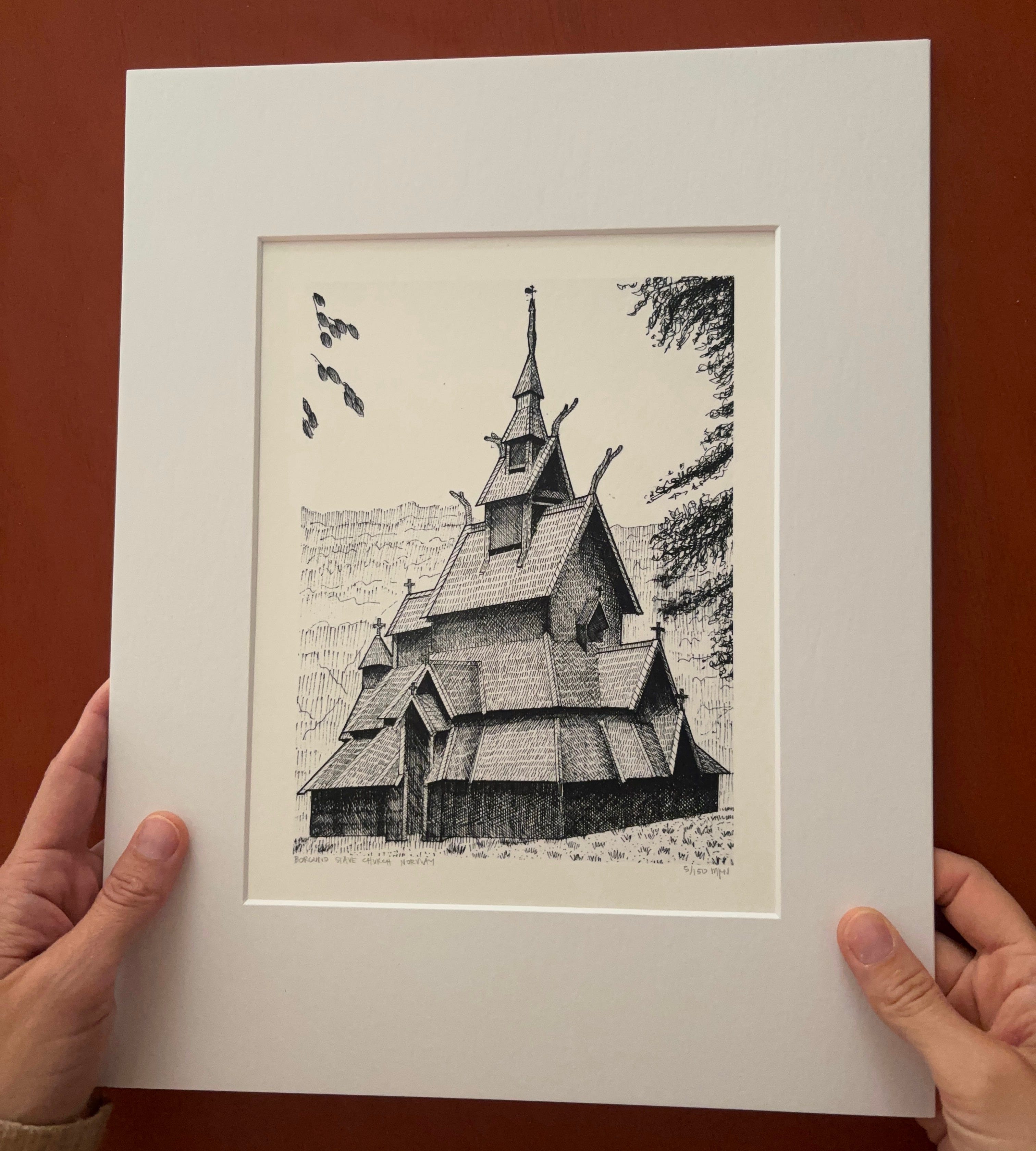
The finished illustration is now available as a limited edition print!
Borgund Stave Church Prints
For those who would like to bring the wonder of Borgund Stave Church home, I’ve released a limited edition of 150 signed prints each matted to 11” x 14”.
The Places of Wonder Mail Club
Last week Places of Wonder No. 01 was mailed to 9 states across the country.


As a member, every month you’ll receive:
An illustrated Place of Wonder postcard
A story behind its architecture and history
What people said about the very first edition:
“We got our very first Architecture Atlas postcard today! Beautiful! I just love how you put it together.”
“I received your postcard mailing. Thank you, I love it!”
“Yay! So cool! Came out perfect!”
A note before you join
For now, the Mail Club is available to U.S. subscribers only. I hope to expand internationally as the club grows.
To receive the next edition, join the Places of Wonder Mail Club by becoming a paid subscriber.
Deep Dives
To learn more about the Viking Age read Children of Ash and Elm: A History of the Vikings by Neil Price.
Next Thursday: Another story through architecture and history.
Mary
P.S. Know someone who would be fascinated by an 800-year-old wooden church guarded by dragons? Share this issue with them.
I’m sharing the progress behind new pen illustrations on Instagram. Come follow along at instagram.com/_archatlas
Sources
Valebrokk, Eva and Thomas Thiis-Evensen. Norway’s Stave Churches: Architecture, History and Legends. Boksenteret, 1993.
Beautiful. I recently finished reading The Sister Bell Trilogy by Lars Mytting, which is really an ode to stave churches and everything they represented.
Both with the long boats and this church these early Scandinavians pushed the use of wood way past what most (with the exception of the Japanese) would believe possible.