

Discover places of wonder through architecture and history. Featuring pen illustrations of remarkable places. Explore: The Architecture Atlas Archive | The Places of Wonder Mail Club
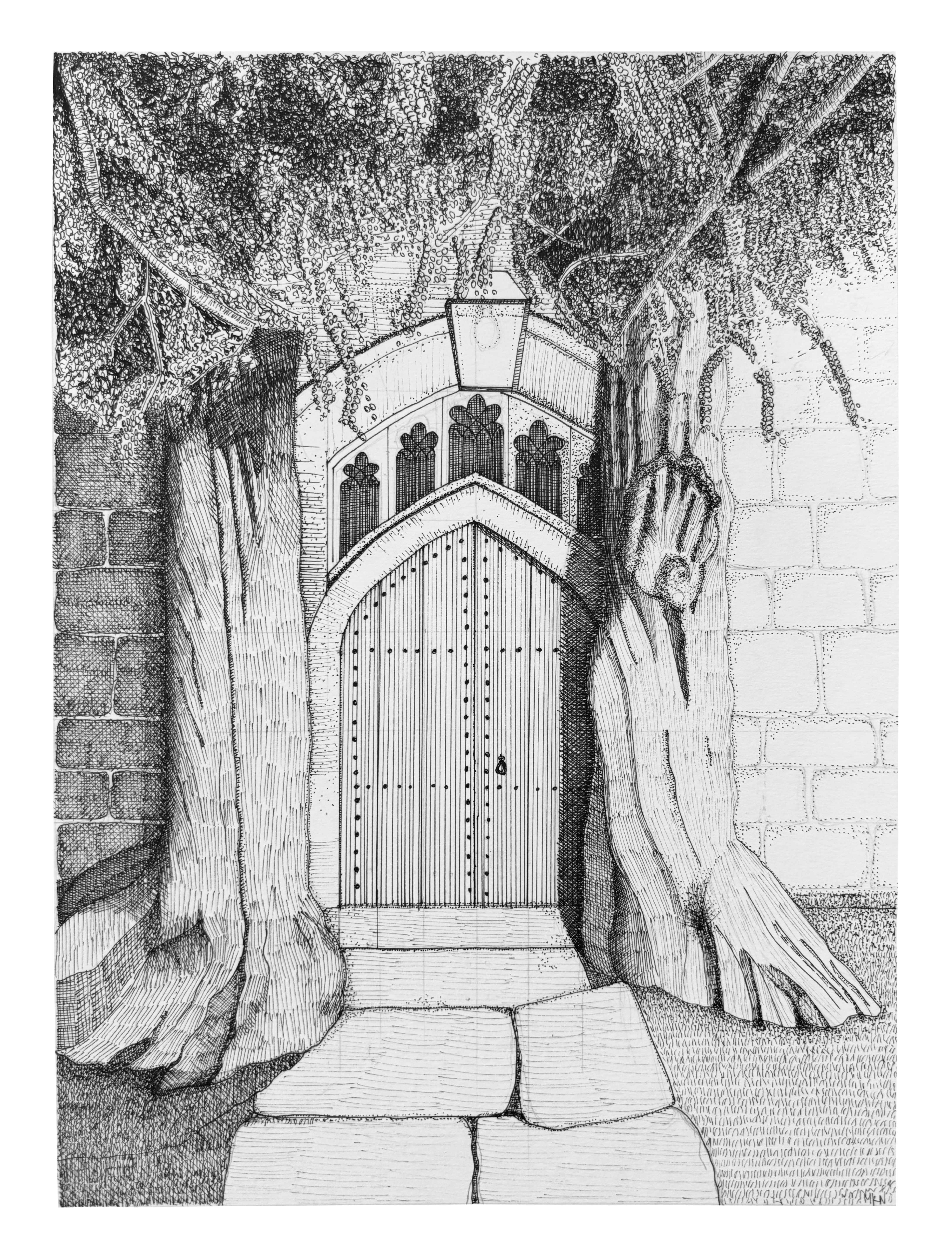
Places of Wonder No. 03
St. Edward’s Church
Stow-on-the-Wold
Overview
Two hours from London, in a pastoral landscape of villages built of cotswold stone, sits an unassuming church with an entryway that looks like a portal to another world. The three hundred year old yew trees grown into the doorway continue to capture imagination into the twenty-first century.
But first, a bit of history.
Origins
With Iron Age beginnings, the Cotswold Hills expanded under Roman control with towns like Corinium (modern day Cirencester) becoming the second largest city after Londinium in the area.
Cutting through the region, the renowned Roman road (Fosse Way) built around 47 AD, leads us to Stow-on-the-Wold, a strategically placed town located at the junction of six roads.
Originally known as Edwardstow, possibly named after Edward the Martyr, or perhaps Edward the Confessor, the market town of Stow-on-the-Wold flourished during the medieval wool trade. And it is in this market town that brings us to our landmark.
St. Edward’s Church
Constructed on the site of a previous Saxon church, the parish church that stands today was largely built in medieval times and was continually reworked throughout the centuries.
Norman buttresses and stonework survive from the 11th and 12th centuries.
The tower and clerestory were funded from the prosperous medieval wool trade in the 15th century. Revisions continued throughout the centuries including a Victorian restoration.
The church even bore witness to the aftermath of an English Civil War battle. After the Battle of Stow-on-the-Wold in 1646, hundreds of Royalist prisoners were held inside the walls of St. Edward’s Church, before being marched to Gloucester.
The North Door
The church’s north door dates to the 13th century and is flanked by two yew trees that have grown directly into its stonework. The yew trees and the north porch were added in the 17th century protecting the older doorway.
Yew trees can live for thousands of years, so these roughly 300 year old trees are relatively young. Its long life has helped the yew tree become a symbol of immortality with many yews protecting ancient burial sites. However its proximity with the grave and its toxicity has associated the yew with a dark omen.
Some even believe yew trees marked the threshold to the underworld.
Legend has it that J.R.R. Tolkien used this entrance as inspiration for the Doors of Durin, leading into Moria in the Lord of the Rings.
Conclusion
The yew trees have guarded the north doors at St. Edward’s Church for centuries and with each passing year, the doorway becomes even more enchanting.
Do you think Tolkien was inspired by these doors that look like a portal to another world?
From the Studio
The Places of Wonder Mail Club: October’s Edition
What paid subscribers received this month:
The illustrated postcard of the yew trees flanking the north doors of St. Edward’s Church
The story card showing the map and the history


Become a paid subscriber to collect the atlas as it’s being created. Your paid support helps me research, write, and illustrate each new place. The mailings ship the first week of each month.
And it’s available as a yearly gift and makes a great gift for travelers and architecture lovers.
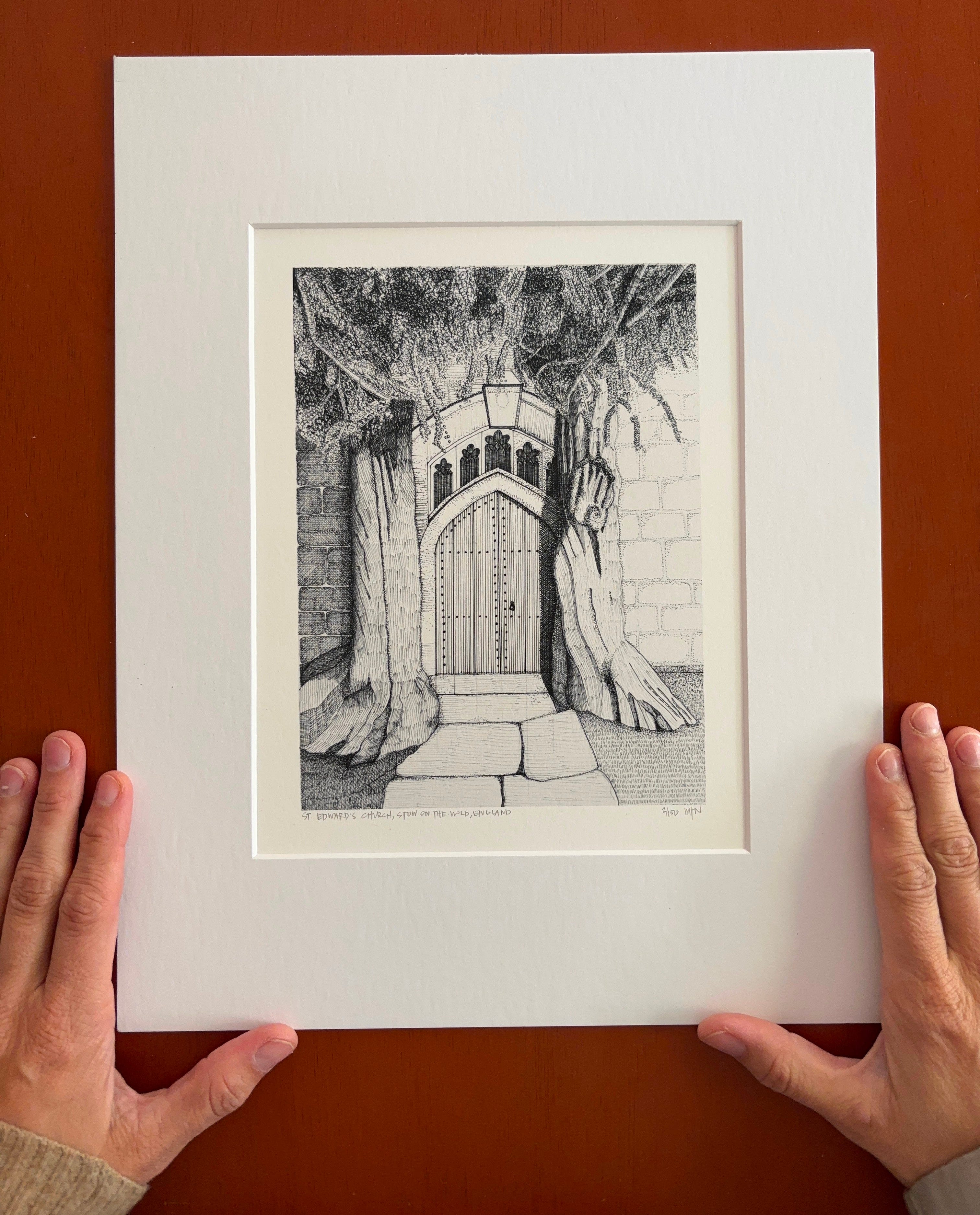
St. Edward’s Church prints
For those who would like to bring the wonder of St. Edward’s Church home, I’ve released a limited edition of 150 signed prints each matted to fit an 11” x 14” frame. This also makes a great gift.
Next Thursday: Another story through architecture and history
Mary
P.S. if you enjoyed this issue, please like and share to help others find it.
I’m Mary, an illustrator and former architect.
I share stories and drawings of remarkable places to help you never lose your sense of wonder.
Read past Places of Wonder…


Issue LXIII
Architecture Atlas Archive | Places of Wonder Mail Club | The Illustrated Atlas
Sources
It really does look like something out of The Lord of the Rings!
If I remember correctly there is an illustration of the doors in LOTR which bear a remarkable resemblance