
The Colosseum: The Story Behind Rome's Great Amphitheater
Welcome to Issue XLVI. From the archive, revised for the current edition.
Each week discover a destination through architecture and history. Explore: The Architecture Atlas Archive | Resources for Architectural Travelers: Maps and Guides
Overview
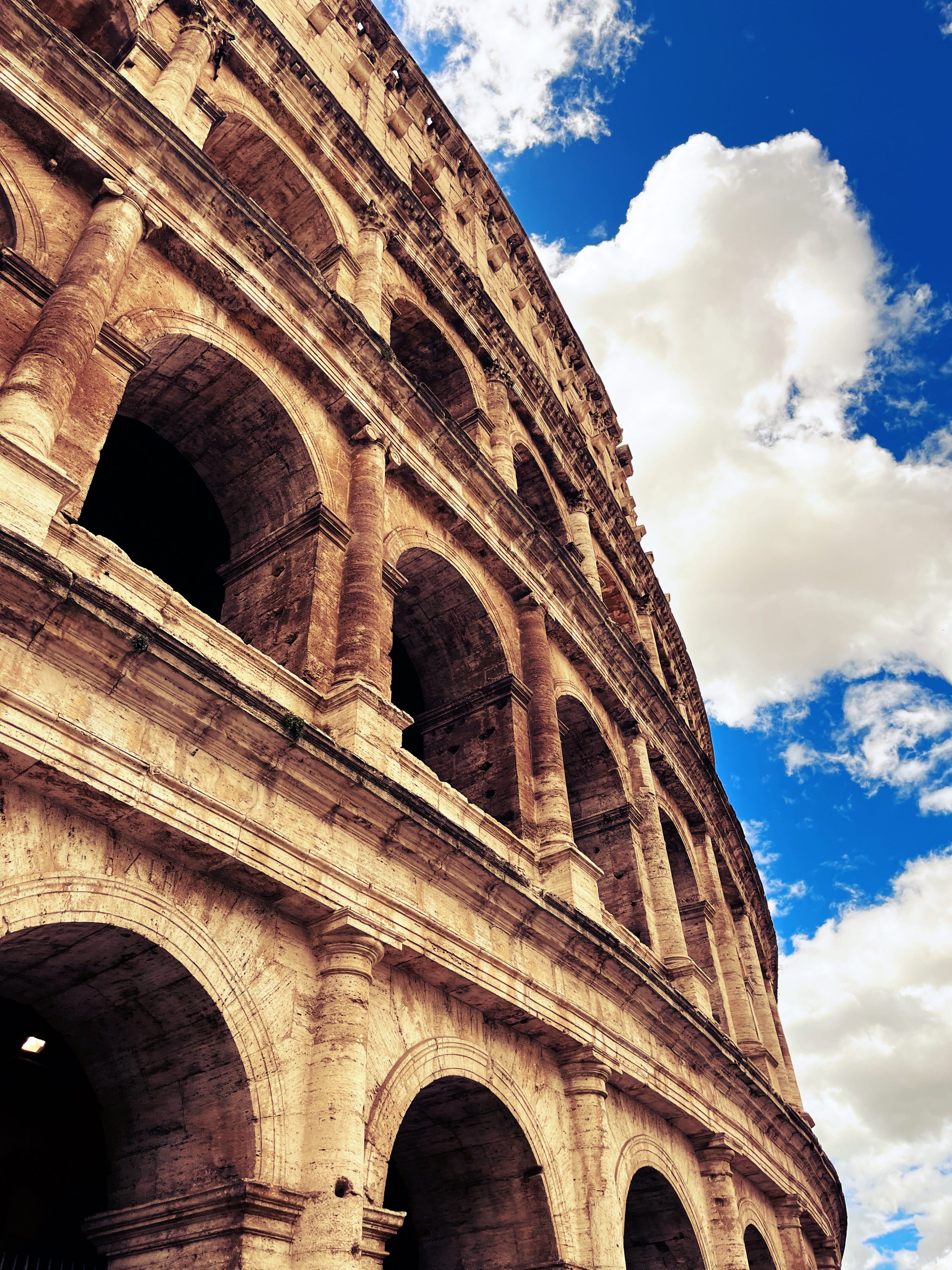
In the heart of Rome sits an immense amphitheater built on the site of an emperor’s private lake. What was once a site of imperial excess became one of Rome’s greatest public monuments.
Origins
From the mythical founding of Rome to the transformation of the Republic into an Empire, the city continued to expand. The first Emperor of Rome, Augustus said he ‘found Rome a city of brick and left her clothed in marble’ and paved the way for the Pax Romana (Roman Peace) often thought of as the golden age of Roman Imperialism that lasted for 200 years.
And it was during the Pax Romana, half a century after Augustus’ reign, when the story of the Colosseum begins.
The Story Behind the Colosseum’s Name
It all starts with the great fire of Rome in 64 AD that destroyed much of the city. Many blamed the already unpopular Emperor Nero for starting the fire (although this is doubtful).
Nero took advantage of the damage done to the city and used the opportunity to build a Domus Aurea (Golden House) for himself. This sprawling palace complex covered an area of 200 acres.
The complex included not only an artificial lake in the center but also a 98ft (30m) bronze statue of himself. This statue was called the Colossus of Nero.
In 68 AD the Senate declared him a public enemy (condemning him to death). Nero fled the city and died by his own hand. And in 70 AD Emperor Vespasian decided to give back to the people of Rome. Vespasian planned an amphitheater for the inhabitants by draining Nero’s artificial lake.
During construction the massive statue of Emperor Nero was modified to represent the sun god instead. And the Colossus of Nero was moved right outside the amphitheater. The amphitheater adopted the nickname Colosseo after this Colossus statue.
And that is why it is called the Colosseum today. But what happened to the actual Colossus of Nero? That remains a mystery.
The Colosseum
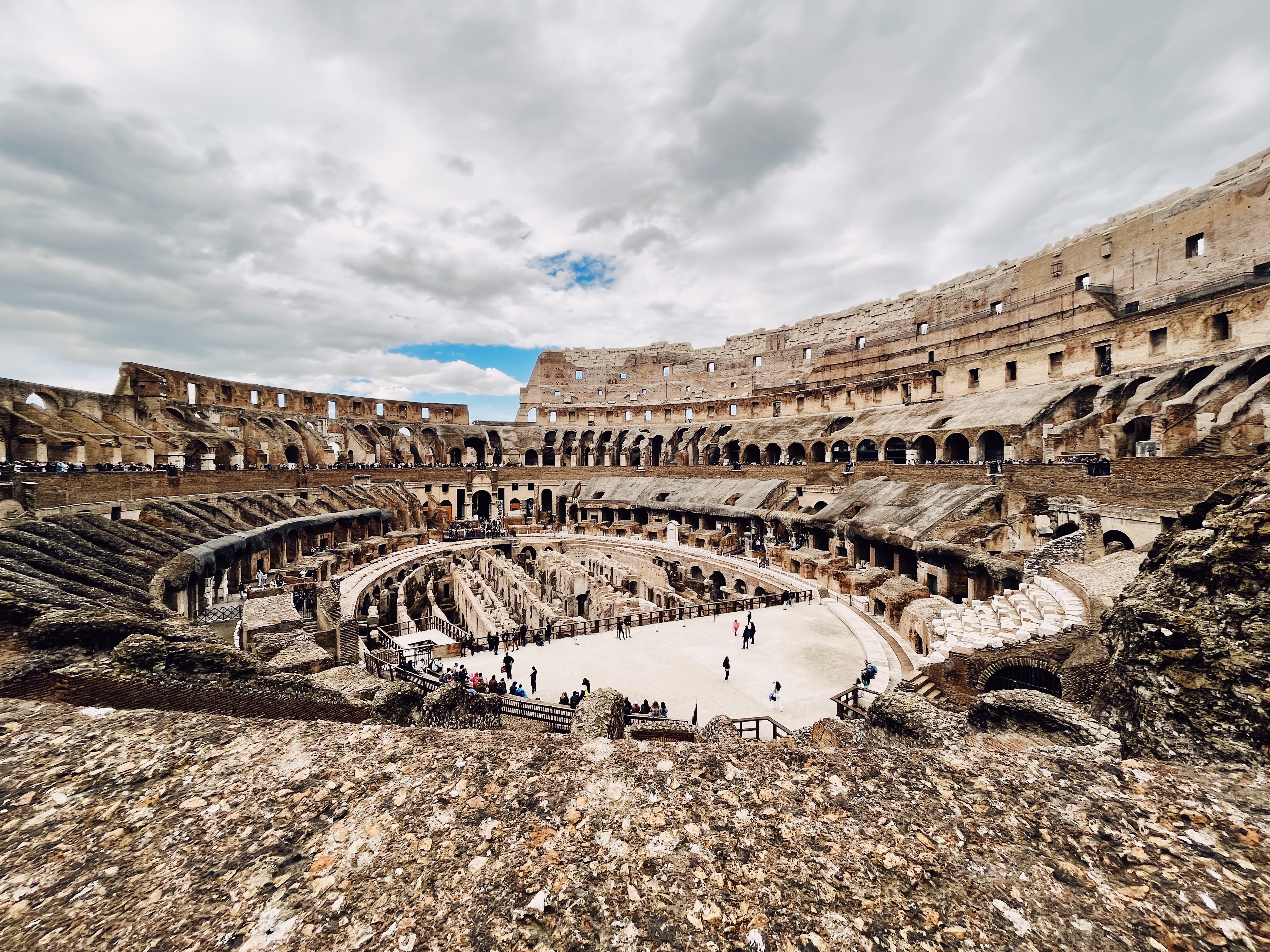
The amphitheater could hold 50,000 spectators and hosted combats between gladiators and in its earliest years even mock naval battles.
The structure measures 620 x 513 ft (189 x 156 m). Arcades of Doric, Ionic, and Corinthian columns, the three column orders established by the Greeks, frame the first three stories of the Colosseum.
After the fall of the Western Roman Empire in the 5th century, the Colosseum was treated mostly as a giant quarry with its marble seats and other useful materials being taken. During the Middle Ages the Colosseum was used as a church and later as a fortress by two Roman families.
Present Day
Today the Colosseum is one of the most popular attractions in Italy drawing millions of visitors per year. It was inscribed as part of the UNESCO World Heritage Site, Historic Centre of Rome in 1980.
Deep Dives
This overview of Rome barely scratched the surface. To learn more about Roman history read SPQR: A History of Ancient Rome by Mary Beard.
Next Thursday: another destination through architecture and history.
Mary
P.S. Know someone who loves Roman architecture and history? This is for them.
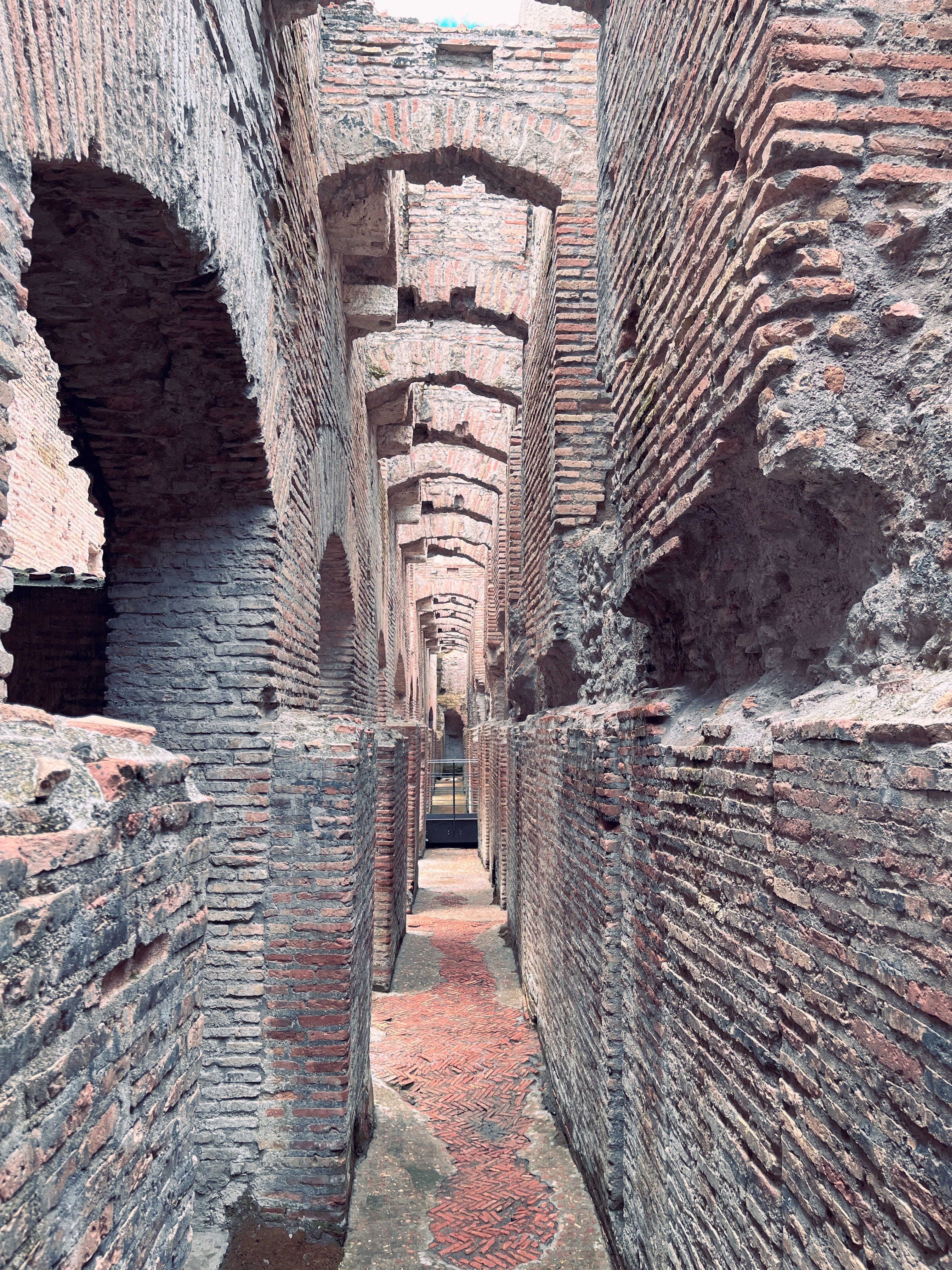
I wish I remembered where I read it, but it was an article about the superiority of Roman mortar and how the mortar contributed to the survival of Roman architecture.